


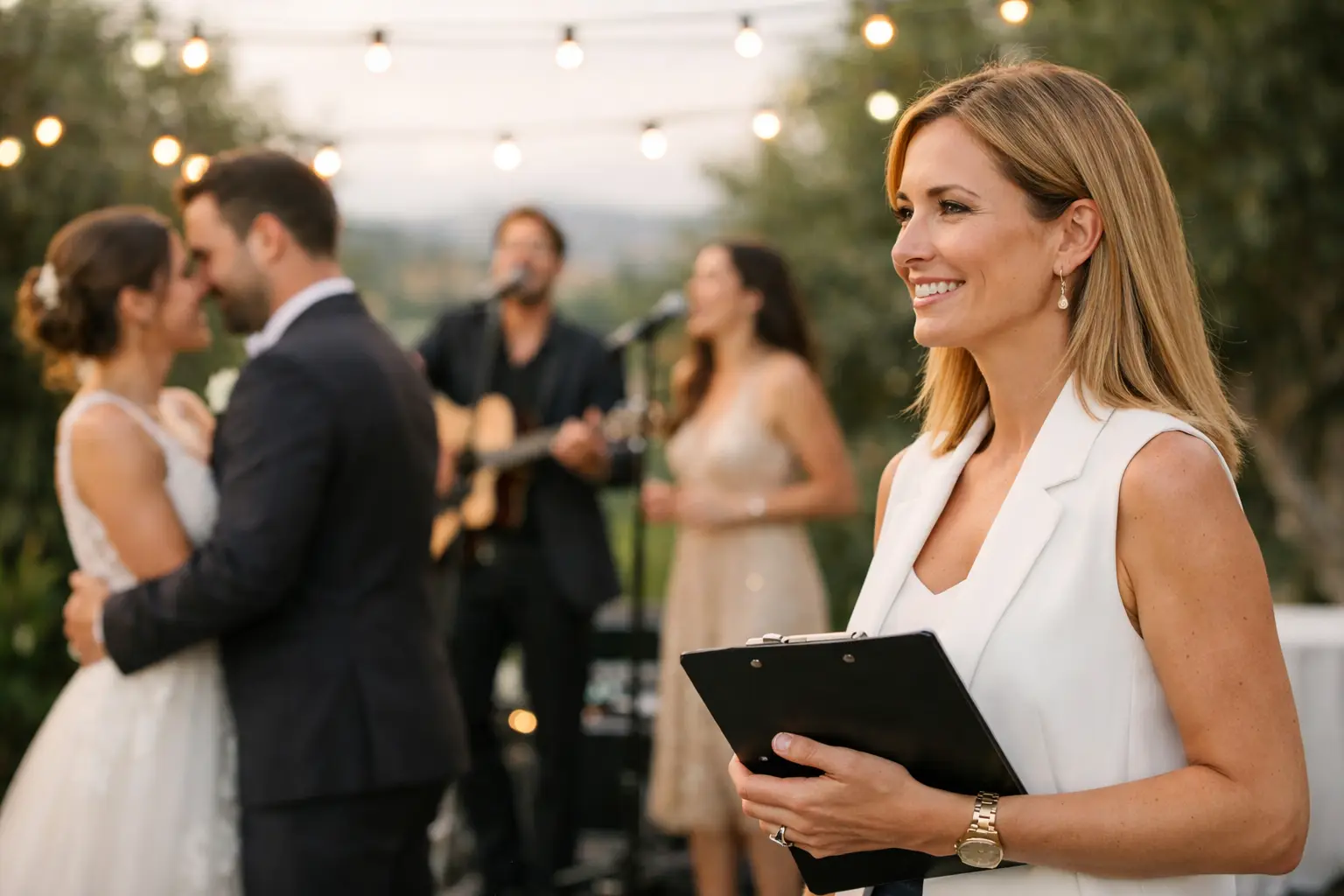
Live wedding music to really thrill
There are moments of a wedding that are remembered even without looking at the photographs: the first chord before entering the ceremony, the voices of the guests when they recognize a song, the silence that is created just before the dance. Live wedding music is not just a pretty accompaniment. It’s a way to give rhythm to emotions and to make every moment feel deeply yours.
But choosing it is not only about deciding between a singer, a group or an instrument. You have to think about the style of the celebration, the spaces, the number of guests, the repertoire and how you want to live the day. When these decisions are made with time and with clear planning, music is no longer just another concern and becomes one of the most special memories.
Why Live Music Changes a Wedding
A playlist can be very well chosen, but there is something difficult to replicate live performance: it responds to the atmosphere. A musician can prolong a song as you enter, soften the volume when an important conversation begins, or raise the energy of the aperitif if you sense that the guests are already relaxed.
It also brings a visual dimension. Watching a violinist during the ceremony, hearing an acoustic voice in the evening, or enjoying a lively formation at the cocktail party makes the experience more relatable. It is not necessary to have live music all day to achieve that effect. Sometimes, choosing two well-thought-out moments is more elegant and more meaningful than trying to cover every minute.
The key is not to understand music as an isolated element. It should talk about the decoration, the schedule, the light, the type of ceremony and your way of celebrating. An open-air Mediterranean wedding can ask for bright and natural sounds; A more intimate celebration may feel more yours with a delicate acoustic format. There is no universally correct choice, but a decision consistent with your history.
Live wedding music: choose the format according to the moment
Before looking for artists, it is advisable to draw the emotional path of the day. Think about where you want your guests to get excited, where you want them to converse comfortably, and when you want the energy to rise. This will make it easier to choose the right format without adding performances out of commitment.
The ceremony: emotion without distracting
In the ceremony, music must accompany, not compete with words or the nerves of the moment. A solo instrument, a string, guitar and voice duo or an acoustic performance can create a very personal atmosphere without overloading it.
Decide which songs represent you for the arrival of each part of the couple, the moments of signing or ritual and the exit. You don’t need to select a different melody for each movement. Two or three well-chosen pieces give more unity and allow everything to flow naturally.
If the ceremony is outdoors, also assess the real conditions: wind, distance between musicians and guests and sounds of the environment. Good technical coordination will prevent a beautiful song from getting lost just when you want to hear it the most.
The aperitif: atmosphere, conversation and celebration
The aperitif is one of the best times to incorporate live music. The guests have already experienced the emotion of the ceremony, they are beginning to greet each other and are eager to enjoy themselves. A recognizable, warm and moderately loud repertoire works particularly well here.
An acoustic duo, a light-style group, or a guitar-accompanied voice can bring the atmosphere to life without impeding conversations. The goal is not to set up a dance floor just yet, but to create a relaxed and special sense of welcome.
At weddings with guests from different countries, which is common on the Costa Blanca, it is advisable to include songs that connect without the need for explanations. Great international classics, acoustic versions of current songs and some songs in Spanish can achieve a beautiful balance. Your guests should feel that there is room for everyone, without losing your identity as a couple.
The banquet and the party: two different energies
During the banquet, less is usually more. Soft ambient music can accompany the entrance, a surprise moment or the beginning of each part of the celebration, but guests will also appreciate being able to talk and enjoy the table without raising their voices.
The party admits a more powerful proposal. Here you can choose a group that performs dance tracks, combine live music with a DJ session or book a specific performance to open the floor. The important thing is to speak clearly about transitions: who gives way to the first dance, how one performance is linked to the next, and what happens during the musicians’ breaks.
The repertoire should sound like you
The musical selection does not have to follow fashions or respond to what is expected of a wedding. It can include that song that was played on your first trip, an unexpected version of a pop song or a traditional piece that has value for your family. What is exciting is not that everyone knows each song, but that the choice has intention.
Share with the musicians a short list of essentials, but leave room for their experience. Professionals know how to adapt songs to the format and read the environment. Asking for too many exact themes can turn a lively performance into a rigid script. It is better to mark your preferences, indicate styles that do not represent you and clarify if there are songs that you prefer to avoid.
Pay attention to the lyrics. A melody may sound romantic, but tell a story that doesn’t fit with a ceremony or a first dance. Listen to the songs calmly, especially if you choose versions in another language, and think about what you want to feel when you hear them that day.
Technical planning protects the magic
Behind an apparently spontaneous performance there are many details that should be resolved first. The access of the musicians, their arrival time, the assembly time, the electricity, the necessary space and the alternative plan in case of rain are aspects that should not be left for the same day.
It is also important to confirm the number of passes, the duration of each one, the breaks and the sound equipment included. A soloist in an intimate ceremony does not need the same technical needs as a band for the party. Adjusting the format to the size of the event avoids both insufficient sound and excessive volume.
If the wedding is held outdoors, check the schedules with special attention. Light, heat, and wind can change a lot between noon and night. A planning and coordination team can centralize these conversations ahead of time, so you don’t have to chase confirmations while trying to enjoy the last few days before the wedding.
The coordination of the day is also decisive. Musicians should know when the ceremony begins, what time the guests arrive, if there will be speeches, when each part of the banquet is served, and what is the signal to begin the first dance. The emotion seems spontaneous when someone has previously taken care of each transition.
How to fit music into your budget
The music budget depends on the number of artists, the duration, the trip, the technical team and the date. That’s why it’s useful to first define what moment you want to highlight before comparing proposals. If you have to prioritise, the ceremony and the aperitif usually offer a great emotional impact with a contained investment, as they concentrate the experience on the most sensitive moments of the day.
Don’t just look at the final price. Ask for clarity about what each proposal includes: hours of presence, editing, sound, repertoire, breaks and possible extensions. An option that seems inexpensive may later require additional technical elements, while a more comprehensive option may simplify the entire organization.
It is also not necessary to give up your idea if the initially planned format exceeds the budget. A duo can create an atmosphere that is just as intimate and memorable as a larger line-up. Scale matters less than the quality of the performance and that the choice fits the moment.
Questions to ask before booking
Before confirming, ask to listen to real recordings and, if possible, videos of performances. This way you will be able to assess not only the musical quality, but also the style, presence and energy they transmit. Ask if they can adapt songs to your chosen format and how much room there is to customize the repertoire.
Also confirm what happens in the event of an unforeseen event: rain, delays, technical problems or the absence of a member. It is not a matter of imagining the worst, but of knowing that there is a plan. That tranquility is one of the most beautiful ways to arrive at the big day with a clear mind.
The right choice will be the one that allows you to listen to the first note and feel that everything is in its place. Let the music tell a part of your story, and when the time comes, forget about planning: look at yourself, breathe, and enjoy what’s playing.
8 Wedding Welcome Cocktail Ideas
Ideas for a beautiful and flowing wedding welcome cocktail: drinks, appetizers, music and details

Charming Mediterranean wedding decoration ideas
Discover how to create an elegant and personal Mediterranean wedding decoration, with flowers, light

Wedding venues on the Costa Blanca
Choosing wedding venues on the Costa Blanca requires looking beyond the views: capacity, plan