


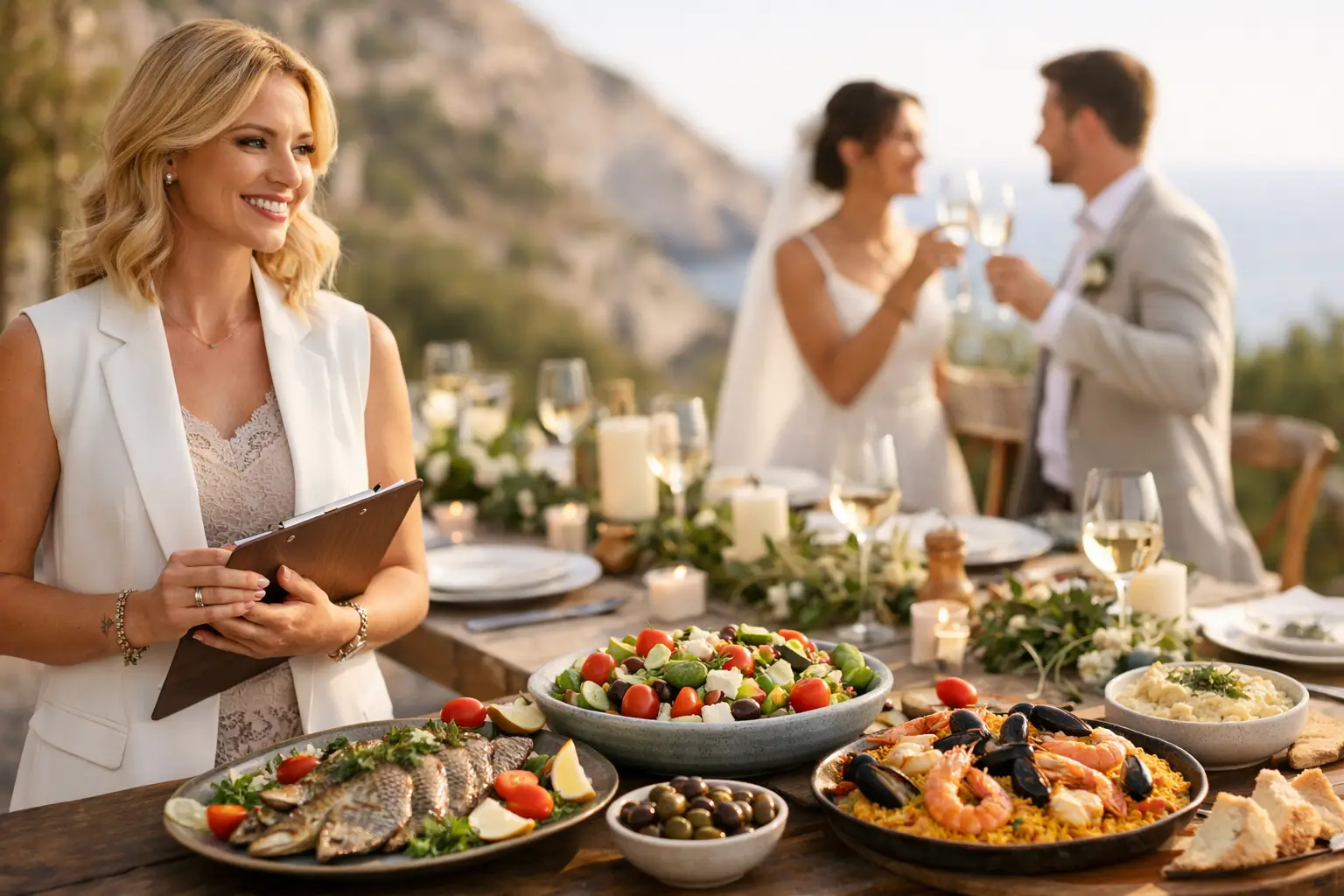
Wedding catering Mediterranean menu that you will fall in love with
A wedding catering Mediterranean menu is not defined only by a paella, a glass of white wine or sea views. It is recognized in the freshness of the product, in dishes that invite you to share and in an experience that accompanies the real rhythm of the celebration. When it is well planned, it allows the guests to feel cared for from the first bite and for the bride and groom to enjoy themselves without having to be aware of schedules, allergies or dishes that arrive late.
At a wedding on the Costa Blanca, the Mediterranean is already part of the landscape, the light and the way you meet. The menu must be up to that standard: elegant, generous and very personal, without falling into predictable formulas or losing sight of the logistics that make impeccable service possible.
What makes a Mediterranean wedding caterer special
Mediterranean cuisine has a precious advantage for a wedding: it speaks a language that almost everyone understands. Seasonal vegetables, fish, rice, citrus fruits, olive oil, aromatic herbs, meats cooked with care and light desserts make up a close, flavourful and visually luminous proposal.
But a Mediterranean menu does not have to be identical in all celebrations. It can be casual and vibrant during a sunset cocktail, refined at a sit-down dinner, or more dynamic at dining stations. The key is to translate your way of celebrating into a coherent sequence of flavors.
The weather also matters. In the warm months, fresh dishes, light textures and well-chosen drinks are much more appreciated than an excessively heavy menu. At spring or autumn weddings, you can add more warmth with soft creams, creamy rice or low-temperature preparations. It’s not about following a rule, but about thinking about how each guest will feel on that particular day.
How to Build a Mediterranean Wedding Menu with Meaning
The best place to start is not a list of dishes, but a conversation. Think about the flavors that represent you, the type of atmosphere you want to create and the profile of your guests. A couple who imagines a long, elegant and leisurely dinner does not need the same service as another who prefers an outdoor party, relaxed and full of movement.
The cocktail should whet the appetite, not exhaust it
The aperitif sets the tone for the wedding. It’s the time for hugs, photographs, and first conversations, so it should be comfortable to eat and easy to enjoy standing up. Bites with roasted vegetables, seafood, cheeses, ham, citrus or delicate doughs work especially well when presented with variety and without saturation.
It is advisable to balance hot and cold options, as well as alternating well-known proposals with some more surprising details. If the cocktail is going to last more than an hour, planning becomes even more important: the passes must have continuity, but without the guests arriving at the table without hunger.
The main course needs personality and precision
In the seated menu, less is usually more. An appetizer that provides freshness, a main course with a defined flavor and a dessert that closes without being heavy can be enough to leave an excellent memory. Adding too many elements doesn’t guarantee a better experience; It often complicates times and makes the menu lose clarity.
Rice dishes are a very Mediterranean and highly celebrated option, especially at destination weddings where guests want to try flavors linked to the place. However, they need precise execution and well-coordinated service. If the format, the number of diners or the space do not favor them arriving at their point, perhaps a different preparation is a better decision. Choosing well is also knowing how to give up what does not fit.
For a more classic dinner, a seasonal fish or a soft meat with vegetable garnishes can offer that balance between elegance and closeness. The presentation must be careful, but never so complex that it delays the service or makes it difficult to enjoy the dish.
Dessert can be light, cheerful, and memorable
After a day of excitement, toasts and dancing ahead, very dense desserts are not always the best choice. Fruits, soft creams, citrus touches and individual proposals allow you to end the dinner with freshness. The wedding cake, of course, can have its own moment, integrated into the after-dinner conversation or turned into a small ceremony before opening the dance floor.
Thinking about all the guests is part of the celebration
A careful menu is also inclusive. Vegetarian, vegan, gluten-free, allergy, or religious restrictions needs should be picked up in advance, not as a last-minute modification. A guest with a dietary need deserves a dish designed for them, not an improvised and unappetizing alternative.
This requires orderly management of confirmations and clear communication before the event. At weddings with international guests, it is also advisable to explain certain ingredients or preparations in a simple way. There is no need to alter the Mediterranean identity of the menu: it is enough to adapt the preparations with the same criteria of quality and presentation.
Children and the elderly also appreciate that their experience is taken into account. A well-resolved children’s menu, served on time, helps families to experience dinner with more peace of mind. For older people, the comfort, temperature of the dishes and the ease of eating them can make a big difference.
Drinking is also part of the story
A good menu loses strength if the drink does not accompany. Water available throughout the celebration, soft drinks, beers, judiciously chosen wines and non-alcoholic options are part of the hospitality. In summer, a fresh and well-presented welcome can completely change the feeling with which guests arrive at the cocktail.
It is not necessary to turn the pairing into something rigid. There are couples who enjoy proposing a selection of wines for each moment and others who prefer a simpler choice. Both options can work. The important thing is that the service has rhythm, that the glasses are not empty and that the team knows how to adapt to the atmosphere at the table.
Budget: where to invest
Catering represents an important part of a wedding experience and therefore the budget. Before choosing, it is useful to assess what is most important to you: exceptional raw materials, an elaborate staging, more variety during the cocktail, a generous dinner or a wider range of drinks.
It’s not always possible to prioritize everything at once. A long cocktail party with many stations, a multi-course dinner, and a full dinner can drive up the cost and demand more space, staff, and time. On the other hand, a more concentrated, very well executed proposal with a clear common thread can be more elegant and more comfortable for everyone.
Transparency is essential. The schedules, the number of passes, the duration of the service, the kitchenware, the necessary personnel and the alternatives for special needs must be defined. This avoids surprises and protects both your investment and the flow of the day.
Service transforms a good menu into a great experience
Food matters, but coordination matters as much as it does. The moment when the cocktail opens, the passage to dinner, the speeches, the cutting of the cake and the dinner must be connected to the music, the photographs and the rhythm you want for your wedding.
A delay in the ceremony, a photo shoot that drags on or a change in temperature should not mess up the whole experience. Therefore, the menu needs a realistic and flexible plan, designed together with the coordination of the event. At Bella Events Spain we work in detail these times so that each moment has its space and you can be present in what is truly important.
A menu that is remembered for how it made you feel
The final choice should not respond to what is expected from a wedding, but to what you want to share. Maybe it’s rice served on the spot, a candy table that brings everyone together before the dance, or a cool dinner under the lights of a summer night. When the taste, the service and your style walk in the same direction, the menu ceases to be just another part of the organization: it becomes one of those memories that the guests continue to tell long after the celebration.
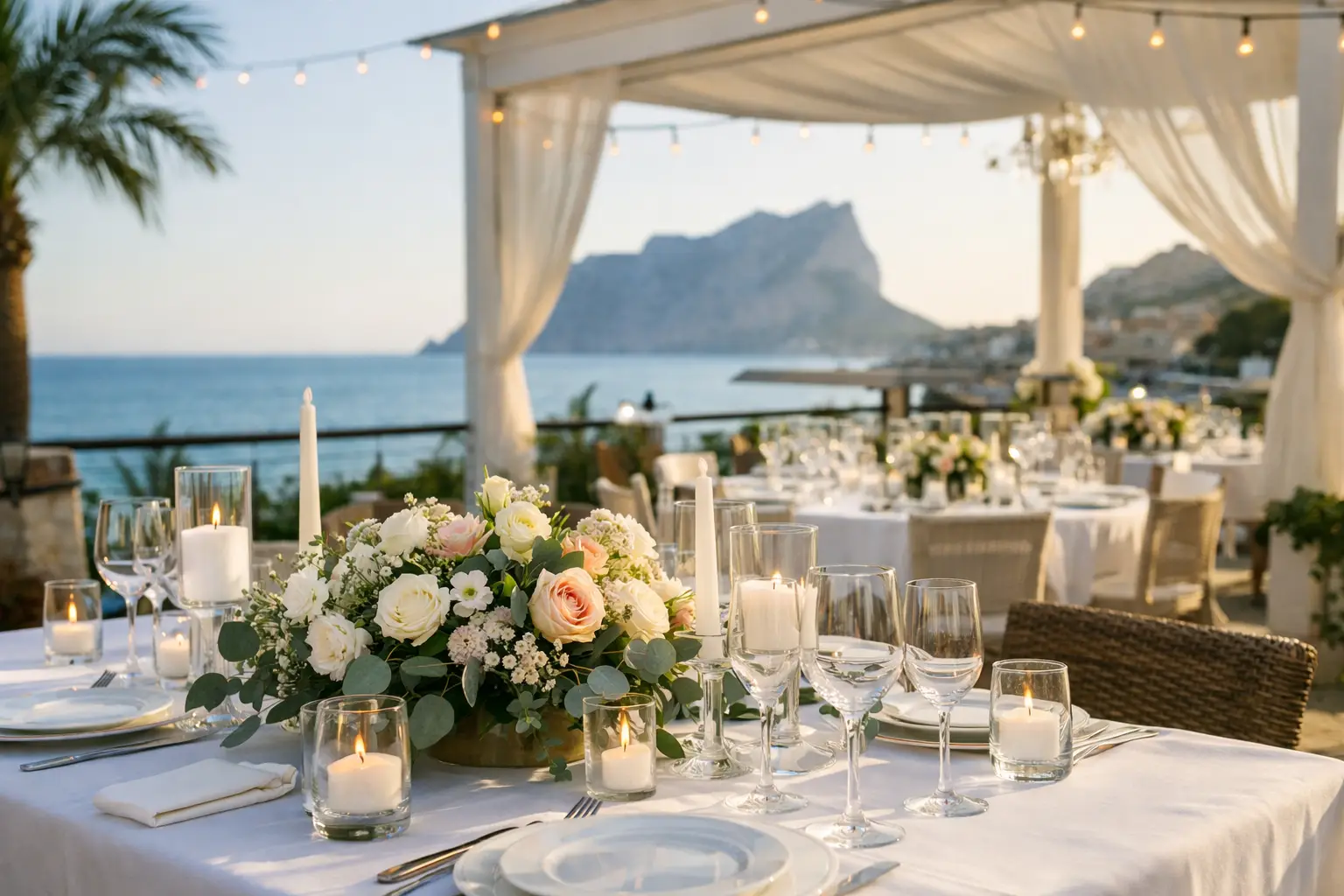
Wedding Restaurants in Moraira: How to Choose
Choosing restaurants for weddings in Moraira requires looking beyond the views: capacity, plan B,